
Article: What Kind of Sand Is Best for a Chicken Run and Where to Buy It?
What Kind of Sand Is Best for a Chicken Run and Where to Buy It?
If you want to use sand in your chicken run, start by calling a local landscape supply company or quarry. Ask for medium-grade, washed construction sand, particularly the plain natural sand they supply for horse arenas.
The sand I look for is usually brown or tan, has visible grains, feels comfortable underfoot, and sifts easily. Depending on where you live, it might be sold as river sand, concrete sand, torpedo sand, or another regional name.
Getting the right material makes a difference. Sand that is too fine, mixed with lots of clay, or intended to pack into a hard surface can leave you with a run that is difficult to maintain.
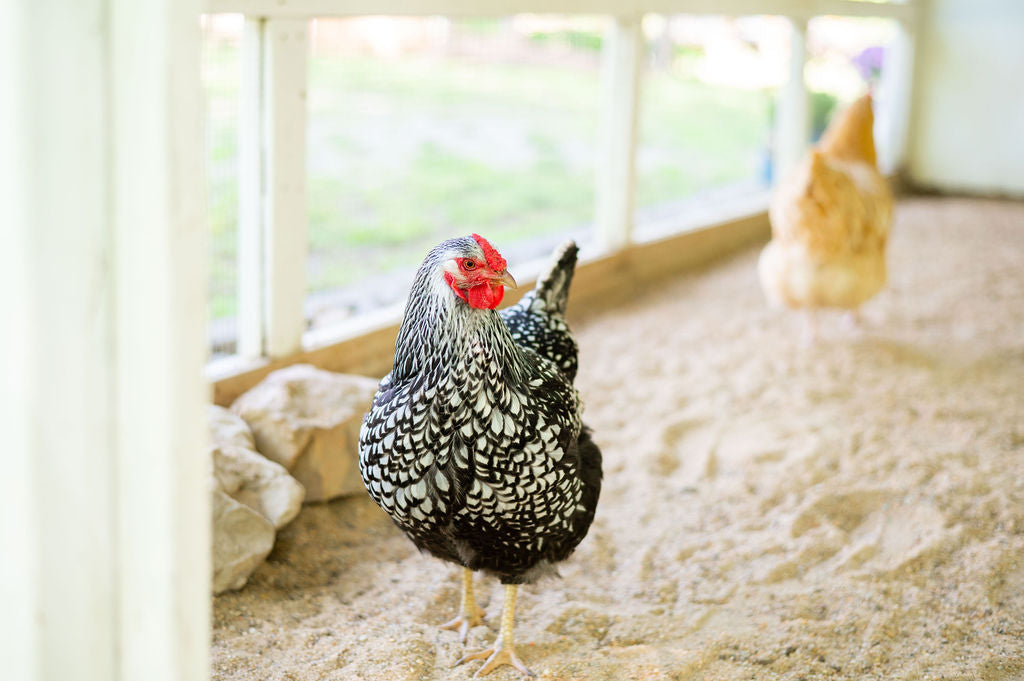
I use sand in my covered chicken run because it makes removing droppings easy. I can also sift out feathers during molting season while leaving the clean sand behind.
Here is how to find sand that works for that kind of setup, even when your local supplier calls it something different.

What kind of sand is best for a chicken run
My recommendation is medium-grade, washed natural construction sand. You want a loose surface that you can rake and sift, with grains small enough to pass through your cleaning tool.
When I say “medium-grade,” I am describing a practical texture to look for. Suppliers may use different grading terms, so ask to see the actual material rather than relying on that phrase alone.
Here are the qualities I would check before buying:
Visible grains and a comfortable texture
The sand should have an obviously granular texture. A handful should look like sand from the river, rather than mostly powder or a mixture of dust and crushed stone.
I look for grains that feel reasonably smooth, without sharp fragments. The goal is a comfortable surface for the chickens to walk on.
Washed sand with fewer fines
Ask whether the sand has been washed to remove excess silt and clay. Those very small particles are often called “fines.” Penn State Extension explains that washing away silt and clay makes sand less dusty. [1]
Look at a dry sample if possible, because a damp pile may have a different appearance than the same material after it dries.
Brown or tan color
The sand I recommend is typically brown or tan. That can help you recognize the sand you're looking for when comparing piles at a landscape yard.
Another popular type of medium grade construction sand is granite sand. This sand is grey. It can work but has more potential to be problematic. Granite sand tends to compact easily and can be sharp if it is crushed.
Easy sifting
Bring a sample home and try it with The Coop Scoop. The sand should fall through the openings easily. Too many pebbles or oversized grains will stay in the basket of the scoop and make every scoop harder to sort.


Ask for the sand used in horse arenas
One of the most helpful ways to find the right sand is to ask:
“What sand do you supply for horse arenas?”
A landscape company that serves local horse owners may immediately recognize the type of natural sand you mean. You can then explain that you want medium-grade sand for a covered chicken run and need it to sift easily.
There is one detail to clarify: horse arenas may use different kinds of sand. Some contain sand mixed with fibers, rubber, or other additives. So, ensure that the sand you're buying is not a manufactured sand.
Ask for plain, washed natural sand without added materials or coatings.
Mentioning horse arenas is a useful sourcing shortcut, but still confirm the texture and ask for a sample.
Other names for chicken run sand
You probably will not find a pile labeled “chicken sand” at your local landscape company. The material is commonly sold for construction or landscaping, and its name varies by region.
Names to ask about include:
• River sand or washed river sand
• Concrete sand or washed concrete sand*
• Torpedo sand
• Construction sand
• Coarse sand
• Builder’s sand
• Arena sand
*Concrete sand is the sand used as an ingredient when making concrete. Plain concrete sand does not mean a bag of concrete mix. Confirm that you are purchasing the sand itself, with no cement or other ingredients added.

Where to buy sand for your chickens
Local landscape supply companies
A landscape supply yard is a good first call. Many carry bulk sand alongside soil, gravel, and mulch, and some offer delivery.
Search for “landscape supply near me,” “bulk washed sand,” or “arena sand” with your city or county. Call before visiting so you can find out which products they stock and whether samples are available.
If they do not supply arena sand, ask which nearby company does. Businesses that sell bulk materials often know the other suppliers in the area.
Local quarries and aggregate suppliers
A quarry or sand and gravel supplier may sell directly to homeowners, or direct you to a landscape company that carries its products.
Explain that you need natural sand for a chicken run. Some quarries primarily sell crushed stone, so asking for “sand” without describing the texture can lead to a different product than you intended.
Ask where the material comes from, whether it is washed, and whether they can provide a sample or product description.
Bagged sand for small projects
For a small area or a top-off, bagged sand may be more convenient than a bulk delivery. Check the bag’s description and the material itself using the same criteria you would use at a landscape yard.
For a larger run, sand from a landscape company will be much more affordable. Costs are approximately $15-$30/yard from a landscape company. This same amount can cost hundreds or thousands of dollars in bagged form.

Sand products I would avoid for this setup
Granite screenings and stone dust
Some suppliers sell products called granite sand, granite screenings, or stone dust.
Granite screenings often contain sharp crushed particles and fines intended to form a firm base. Taylor’s Landscape Supply, for example, describes its granite screenings as a powdery crushed material that compacts tightly. [4]
That is a different texture from the loose natural sand I look for when I want to sift a run. I would definitely pass on a product sold specifically for packing into a hard surface.
Natural sand can still settle or become firmer with moisture and use. It all depends on the grain sizes, shape, and conditions. Choosing the right sand and maintaining it both matter.
Very fine sand
Do not buy play sand or beach sand. Instead, look for the visible, medium-sized grains described above. Check the actual product, because sand sold under any broad label can vary.
Masonry sand is another product to inspect carefully. Some grades are finer than the material you want for an easily sifted chicken run.
Sand with binders or other ingredients
DO NOT BUY polymeric sand, concrete mix, and products designed to harden or bind together. These would be harmful to your chickens. Start with a known, plain, natural sand so you know what you are bringing into the run.
Where sand works best
Use sand specifically for a covered chicken run with good drainage and regular cleaning.
The cover helps keep rain from soaking the surface. Good drainage gives water a route away from the run if it enters from the sides or surrounding ground. Regular sifting removes droppings before they accumulate.
Sand is much easier to sift when dry. If your run floods, receives roof runoff, or stays wet because it sits in a low spot, address those conditions before ordering sand. Adding a layer over a persistent drainage problem will not reliably give you the dry surface you want.
I use hemp inside my enclosed coop and sand in the covered run. That lets me choose materials for how I maintain each space.
If you are considering sand inside a coop, think about the floor’s load capacity, moisture management, and how you will remove waste. A raised wooden floor and a ground-level run are different installations, so the depth you use in one should not automatically carry over to the other.

How to keep a sand chicken run clean
Once the sand is in place you’ll want to keep it clean. Remove droppings daily or weekly, sift out feathers and rake the surface level.
Check the run at least 1-2 times per week and clean more often if waste accumulates quickly. Pay attention to favorite resting spots and areas around feeders and waterers where chickens spend more time.
I use the Coop Scoop for this job. I designed it specifically for cleaning chicken coops and runs. The raking tines gather waste and feathers, and the basket lets sand fall through while larger debris stays in the scoop.
During molting season, this makes it easy to gather feathers without removing the sand along with them. It is another reason to test a sample with your cleaning tool before placing a big order.


Common questions about chicken sand
Can I put sand over old bedding?
I would remove accumulated manure before installing the sand. If your sand was contaminated with feed dust or other organics that could not be sifted from the sand, you may need to remove the sand too.
How often does chicken run sand need replacing?
Use its condition as your guide. Top up areas that have become thin, and remove material that is contaminated or cannot be cleaned effectively. Regular sifting extends the life of the chicken sand.
Is sand better than shavings for a chicken run?
For a covered run, sand is the best substrate because you can remove droppings while leaving most of the substrate in place. Shavings and hemp are an absorbent bedding material and are best used inside the coop where it is not exposed to moisture.
Does sand replace an outdoor foraging area?
My chickens also have access to a separate chicken yard with natural materials. The covered sand run gives them a space I can clean easily, while the yard offers another area to explore. You can plan those spaces separately when deciding where to use sand.
Start with a local supplier and a sample
Call your local landscape company or quarry and ask for medium-grade, washed construction sand, particularly the plain natural sand used in horse arenas. Confirm the product and try a sample before you order.
River sand, concrete sand, and torpedo sand are useful names to ask about. The material you bring home should feel comfortable, stay manageable in your covered run, and pass easily through your scoop.
For an easier way to remove droppings and molting feathers, explore the Coop Scoop. You can also read my comparison of chicken run substrates for more about choosing materials for your setup.