
Sand vs Mulch vs Straw | What Is The Best Substrate For Your Chicken Run?
If you’ve been in the chicken world for any amount of time, you’ve probably noticed that everyone has very strong opinions about what material you should use in your run.
Sand. Wood chips. Straw. “Just let it compost.”
And most of the time, those opinions are based on old methods passed down through generations… not actual research.
Proper animal care is something that is deeply important to me, so this is a subject that I’ve spent years researching myself.
I’ve pulled all of the scientific articles that I’ve referenced in my time as a chicken keeper and compiled them into an article for you all.
It's a lot, so stick with me!
Let’s break this down in a way that actually makes sense.

THE RATIO OF CHICKENS TO THEIR LIVING SPACE.
Before we even talk about materials, we need to talk about the different spaces chickens live in.
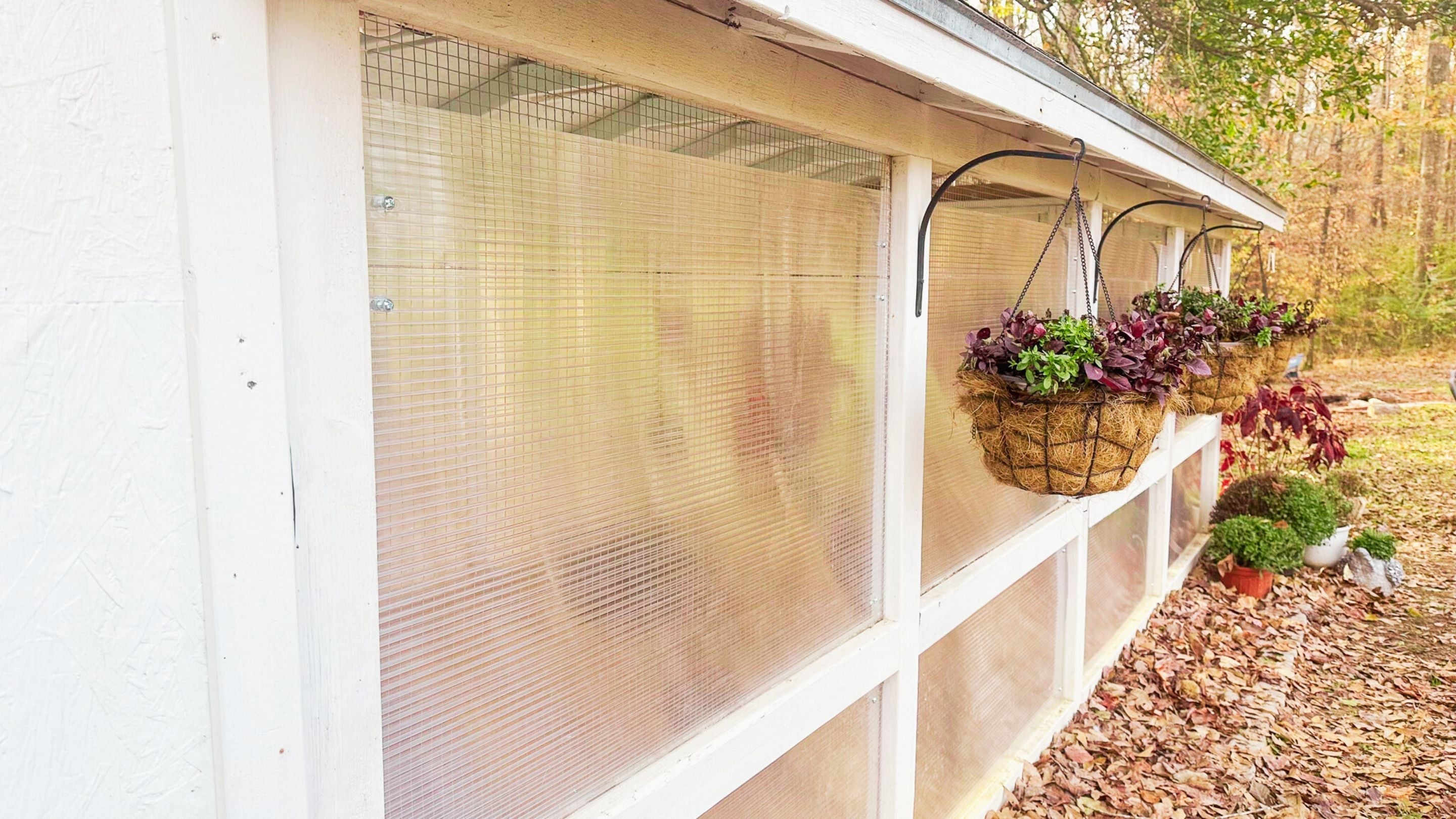
Some chicken keepers have small covered runs in suburban backyards, some have acres for their chickens to roam and others have something in between.
Then there's covered spaces vs uncovered space.
Obviously, some of these living areas are more concentrated than others. This is where the right substrate makes a difference.
A smaller, enclosed run means waste builds up quickly. A large outdoor space means waste is spread out and naturally broken down.
Those are two completely different systems. But they’re often talked about like they’re the same thing.
Sand in covered runs & coops:
what research actually shows
Sand is one of the few bedding options that’s been studied in poultry research.
A study out of Auburn University compared sand to pine shavings in a controlled environment. The researchers found no meaningful difference in mortality, feed conversion, or ammonia, but bacterial counts, including E. coli, were significantly lower in sand than in pine shavings. The study concluded that sand showed “good potential as an alternative litter material.”
But here is the part that is really interesting:
The sand in this study was not being cleaned.
This was not a backyard setup where someone was going out with a scoop every morning and removing droppings from the sand. The article states that no litter was added or removed during the trial, aside from stirring the litter during sampling.
This matters because, even without daily cleaning, sand still showed less bacterial load. Imagine the results if we tested a well maintained sand run.

Chickens actually prefer sand: behavior research
Many people claim that sand inhibits a chicken's natural foraging behavior. However, there is evidence that shows sand actually supports these natural instincts.
A review published in Frontiers in Veterinary Science cites multiple studies on alternative poultry bedding and shows that, when given a choice, chickens actually showed a preference for sand.
This makes sense to me when I watch my own chickens!
From this study by University of California:
"Drinking, dustbathing, preening, and sitting increased in frequency on the sand side but decreased on the wood shavings side during the day, as did resting at night."
So it’s not just about cleanliness. Sand supports behaviors they’re naturally driven to do and chickens actually prefer it over other beddings when given the choice.


Sand Does Not Cause Bumblefoot
Another concern I hear is that sand will act like sandpaper on a chicken’s feet and create tiny abrasions that lead to bumblefoot.
But this is not what the research has found.
Bumblefoot happens when bacteria enter the foot through damaged skin from small cuts, scrapes, punctures, splinters, rough roosts, wire, sharp objects, or repeated pressure on the footpad.
The biggest contributors to footpad problems is not sand.
It’s wet, dirty, caked bedding.
When bedding stays wet, it can soften and irritate the skin on the bottom of a chicken’s foot. Add manure, bacteria, and ammonia and the footpad can become irritated and infected. Mississippi State Extension explains that wet litter is associated with increased incidence and severity of footpad dermatitis.
Bumblefoot is not caused by a chicken walking on a certain substrate. It is caused by bacteria entering damaged skin.
So when we’re talking about bumblefoot prevention, we want to:
- Protect the footpad from injury or irritation
- Reduce bacterial exposure
This is where sand shines.
The Auburn University sand study looked at footpad lesions in their research. If sand was acting like sandpaper and damaging the bottoms of chickens feet, you would expect to see more footpad problems in the birds raised on sand in this study. But the study found no significant difference in footpad lesions between sand and pine shavings.
In that same study, bacterial counts were lower in sand than in pine shavings.
The idea that sand automatically acts like sandpaper and creates foot injuries is inaccurate and not supported by research.
In a covered, well draining run where sand stays dry and manure is removed regularly, sand may actually help reduce bumblefoot.
That's just another reason sand makes sense. It stays drier and allows you to remove waste instead of letting it cake into the substrate under their feet.

Where sand works best
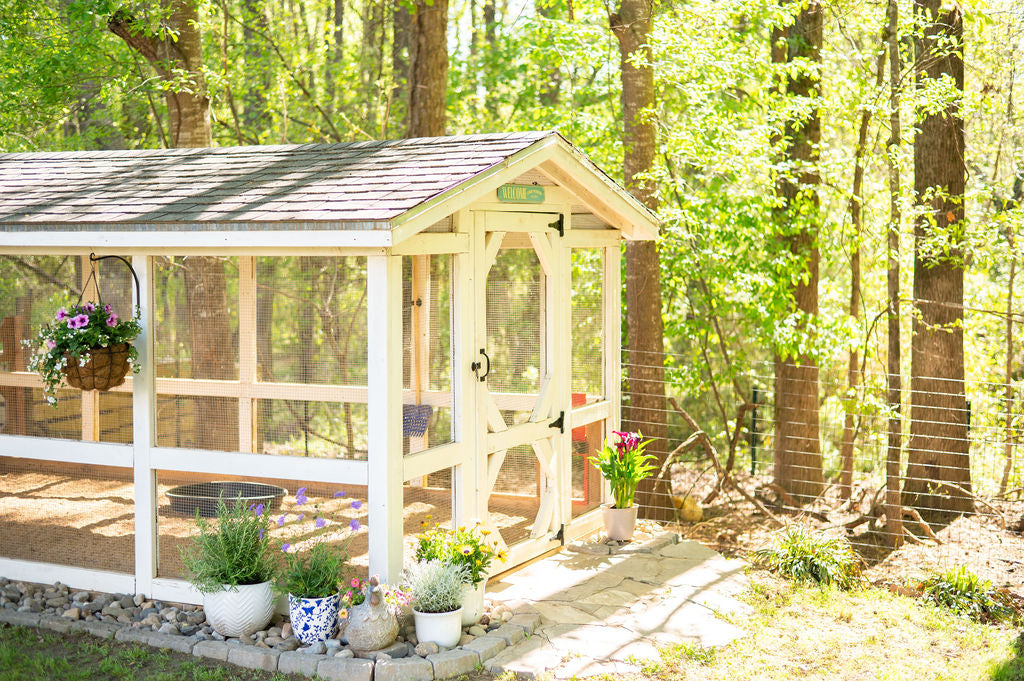
Sand works best in a covered, well-draining space where you can manage moisture and remove waste regularly.
When sand stays dry, it is easy to rake, sift, and clean. Instead of manure being mixed into an organic material and left to slowly decompose, droppings can be removed. For a smaller, more concentrated run, that is a huge advantage.
But, sand does not perform the same way when it is fully exposed to the elements. Once sand gets wet, it can compact, hold moisture (if your space is not well draining), mix with soil and it becomes much harder to clean. At that point, you lose the benefits that make sand useful in the first place.
In an uncovered outdoor run, sand can wash away or turn into a heavy, wet mess that is difficult to manage. Instead of a dry, siftable surface, it can become part of the mud and manure problem.
So when I recommend sand, I am specifically talking about covered, well-draining runs where you can keep it dry and remove waste regularly.
For us, sand makes sense in our smaller covered run because we can control the environment, keep it dry, and clean it daily. That is very different from dumping sand into a large outdoor yard and expecting it to behave the same way through rain, weather, and seasonal changes.
Why sand works well in smaller runs
In a more confined, high traffic space, sand has a few advantages:
- It doesn’t hold moisture
- It doesn’t provide a nutrient source for bacterial and fungal growth
- It drains really well, which keeps their space dry
- It’s super easy to clean and maintain
When waste is concentrated, these things are important.
This is why sand makes so much sense in a small covered run. It gives you a substrate that stays dry, is easier to clean, and helps you remove manure instead of letting it build up.

Substrates To Avoid In Small Covered Spaces
Mulch, Savings & Straw
What is “Deep Litter" & Composting?
This is where I've seen a lot of push back.
You’ll hear: “It composts itself.”
But true composting requires sustained heat (150+ degrees), properly balanced carbon and nitrogen, oxygen, and active decomposition to manage harmful bacteria like E. coli, salmonella, campylobacter and fungus like histoplasma.
That’s not happening in your backyard chicken coop or run.
What’s actually happening is slow decomposition. And in a smaller, enclosed space, that can lead to moisture buildup, higher bacterial and fungal load and ammonia build up.
This is why you'll see chicken keepers pulling the deep litter out of their coops and into their compost piles. It was never truly composting in the first place.
Mississippi State Extension also explains that dry litter is important for controlling ammonia and flock health.
Chicken's respiratory systems are extremely sensitive.
If you can smell ammonia when you open the coop, it’s already been too high for them for a while.
Straw For Chickens and why I don’t recommend it
Straw is one of those materials that gets recommended a lot because it’s traditional, easy to find, and inexpensive.
But just because something has been used for generations doesn’t mean it’s the best option.
Straw can mat down quickly and doesn't absorb moisture well. As discussed in the "deep litter" section, you need to avoid caking and moisture in your chickens living space.
Straw packs together instead of staying loose and easy to work through, and it has poor absorbency.
University of Georgia’s Poultry Environmental Quality Handbook compares alternative litter materials, including wheat straw, rice straw, wood shavings, and rice hulls. In that article, straw bedding was associated with higher moisture content, higher pH and lower cleanliness scores compared with some other materials.
That matters because wet, caked litter is a big problem. Dry litter supports a healthier flock environment. Once bedding cakes together and holds moisture, it becomes much harder to manage.
STRAW & CROP IMPACTION
Straw as a bedding is a concern if chickens eat it, especially when pieces are long and fibrous.
The strongest research here shows that long, fibrous plant material can contribute to impacted crops.
That’s enough for me to avoid using loose straw (or grass clippings, hay, etc.) in chicken's living spaces when better options exist today.
So for me, straw is not a substrate that I will ever use or recommend for runs, coops or nesting boxes.
For nesting boxes, I prefer hemp nesting pads. They’re easier to replace, easier to keep clean and don’t create the same hazards that straw can.
Large outdoor runs are an entirely different system
Let's talk about larger outdoor runs with significantly more space per chicken.
In this kind of setup, natural ground and wood chips can make a lot more sense than they would in a small, enclosed run.

Where wood chips actually make sense
Wood chips aren’t inherently problematic. They’re just often used in the wrong setting.
They have the potential to work well when they’re used in the right conditions:
• Outdoors, NOT covered with a roof
• Exposed to sun, rain and air
• Where drainage is excellent
• Where the chicken to space ratio is very low, like a minimum of 200sqft per chicken.
Wood chips can help reduce mud, improve drainage, add carbon over manure, and support gradual breakdown.
But again, that only works when the space and conditions support it.
In a smaller, enclosed run wood chips can hold moisture, pack down, harbor mold and fungus, and become a hazard for your chickens.
Why this could work
When chickens have more space, their waste isn’t building up in one concentrated area.
Instead, it’s spread out and exposed to sunlight, rain and airflow. This means their waste can be slowly broken down by soil microbes without too much competition.
This is closer to what you see in pasture systems.
When the space is large enough and the ground is not overloaded, manure is allowed to break down slowly. It's not a concentrated waste issue.
That balance depends on not overcrowding the space.
The takeaway
It’s all about matching the substrate to the environment.
Smaller, covered runs with a higher chicken to space ratio
Sand works extremely well because it stays dry, is easier to clean and doesn’t support microbial growth the same way organic material does.
Larger outdoor UNCOVERED runs with a lower chicken to space ratio
Natural ground and wood chips have the potential to work well because the system has room to balance. Waste is diluted, sunlight and airflow help, and soil biology plays a role in breakdown without competition from an overwhelming amount of manure.
Straw
Leave it out altogether. Straw can mat down, hold moisture and cake with manure. It can also cause an impacted crop.
In my opinion, it’s better kept out of chicken living spaces when there are cleaner, easier to maintain options available.
What we use and why
In our setup:
- Covered run → sand
- Large outdoor, uncovered run → natural ground with wood chips
- Nesting boxes → hemp nesting pads
Each space serves a different purpose, and they function differently.
If you’ve ever felt like the advice out there doesn’t quite add up, it’s usually because people are trying to apply the same solution to completely different setups, or they're clouded by outdated generational advice.
Once you match these substrates to your unique environment, it becomes much clearer.
References
Sand as litter / sand vs. pine shavings
Bilgili, S. F., Montenegro, G. I., Hess, J. B., & Eckman, M. K. Sand as Litter for Rearing Broiler Chickens. Journal of Applied Poultry Research, 1999. This is the Auburn University study comparing sand and pine shavings in broiler chickens. The study found no meaningful difference in mortality, feed conversion, or ammonia, while bacterial counts, including E. coli, were significantly lower in sand in one trial.
Alternative bedding review / sand preference / straw limitations
Diarra, S., Lameta, S., Amosa, F., & Anand, S. Alternative Bedding Materials for Poultry: Availability, Efficacy, and Major Constraints. Frontiers in Veterinary Science, 2021. This review summarizes research on sand, straw, wood shavings, rice hulls, corn cob, and other poultry bedding materials. It notes that broilers showed preference for sand over wood shavings and some other substrates in terms of performance and natural behaviors, and it also notes that straw and hay can compact rapidly and are less ideal for moisture management.
What Causes Footpad Dermatitis in Poultry?
Mississippi State Extension explains that wet litter is associated with increased incidence and severity of footpad dermatitis.
California behavior study: sand vs. wood shavings
Shields, S. J., Garner, J. P., & Mench, J. A. Effect of Sand and Wood-Shavings Bedding on the Behavior of Broiler Chickens. Poultry Science, 2005. This is the University of California behavior study referenced in the Frontiers review. It is the main citation behind the statement that sand can support natural behaviors such as dust bathing and that broilers may prefer sand when given a choice.
Sand and other bedding materials in hot/humid conditions
Garcês, A., Afonso, S. M. S., Chilundo, A., & Jairoce, C. T. S. Evaluation of Different Litter Materials for Broiler Production in a Hot and Humid Environment: 1. Litter Characteristics and Quality. Journal of Applied Poultry Research, 2013. This study compared river-bed sand, coconut husk, rice hulls, grass, newspaper/wood shavings, and corn cob. It found that sand had much lower moisture than wood shavings, although sand volatilized more ammonia than wood shavings in that study, which is a good reminder that management and environment matter.
Straw moisture / litter depth
Shepherd, E. M., Fairchild, B. D., & Ritz, C. W. Alternative Bedding Materials and Litter Depth Impact Litter Moisture and Footpad Dermatitis. Journal of Applied Poultry Research, 2017. This study found chopped wheat straw absorbed nearly seven times its own weight in moisture, which supports the point that straw can hold a lot of moisture once wet.
University of Georgia alternative bedding summary
University of Georgia Poultry Environmental Quality Handbook. Alternative Bedding — Select Materials May Have Hidden Costs. This extension article summarizes bedding research and notes that straw-based litters had higher moisture content, pH values, temperatures, and lower cleanliness scores in the research it reviewed.
Litter moisture, caking, and ammonia
Mississippi State University Extension. Poultry Litter Management. This extension publication explains that moisture in litter contributes to caking and that once cake forms, it is difficult to reverse.
Mississippi State University Extension. Managing Litter Moisture in Broiler Houses with Built-Up Litter. This publication states that litter moisture above about 25% can increase ammonia production and pathogen load, which supports the article’s warning about wet, caked litter.
Mississippi State University Extension. Good Litter Management Improves Broiler Performance, Health, and Welfare. This extension article explains that ammonia from wet litter is an animal-welfare concern and can negatively affect bird performance and flock health.
Crop impaction / long fibrous material
University of Maryland Extension. Common Crop Issues in Backyard Chickens. This extension resource notes that crop impaction can result from chickens eating large amounts of poorly digestible materials such as grass, feathers, string, plastic, or other indigestible material.
Huang, A. S., Carvallo, F. R., Pitesky, M. E., Stoute, S., & Mete, A. Gastrointestinal Impactions in Backyard Poultry. Journal of Veterinary Diagnostic Investigation, 2019. This University of California/CAHFS retrospective study found that 42 backyard poultry deaths were associated with gastrointestinal impaction, and 32 of the 42 cases, or 76%, were caused by fibrous plant material. This does not prove straw specifically causes crop impaction, but it strongly supports caution around long, fibrous material.
Natural ground / manure as nutrient input
North Carolina State Extension. Poultry Litter as a Fertilizer Source. This extension publication explains that poultry litter/manure can be an excellent nutrient source when managed properly, and that the key is matching nutrients to the land/crop’s needs. This supports the article’s broader point that manure spread over a large area can function more like a nutrient input than a concentrated waste issue.
ATTRA / NCAT. Pastured Poultry Nutrition and Forages. This publication discusses the role of forage in pastured poultry systems and supports the idea that outdoor, lower-density poultry systems function differently from confined runs.